Author: Masha
Photos by the Masha
Week Eleven – The Nursing Class
August 2019
This week I started a nursing class through the University of Wisconsin – Milwaukee. We are staying with host families in Quito, Ecuador and attending classes at Universidad de las Americas (UDLA).
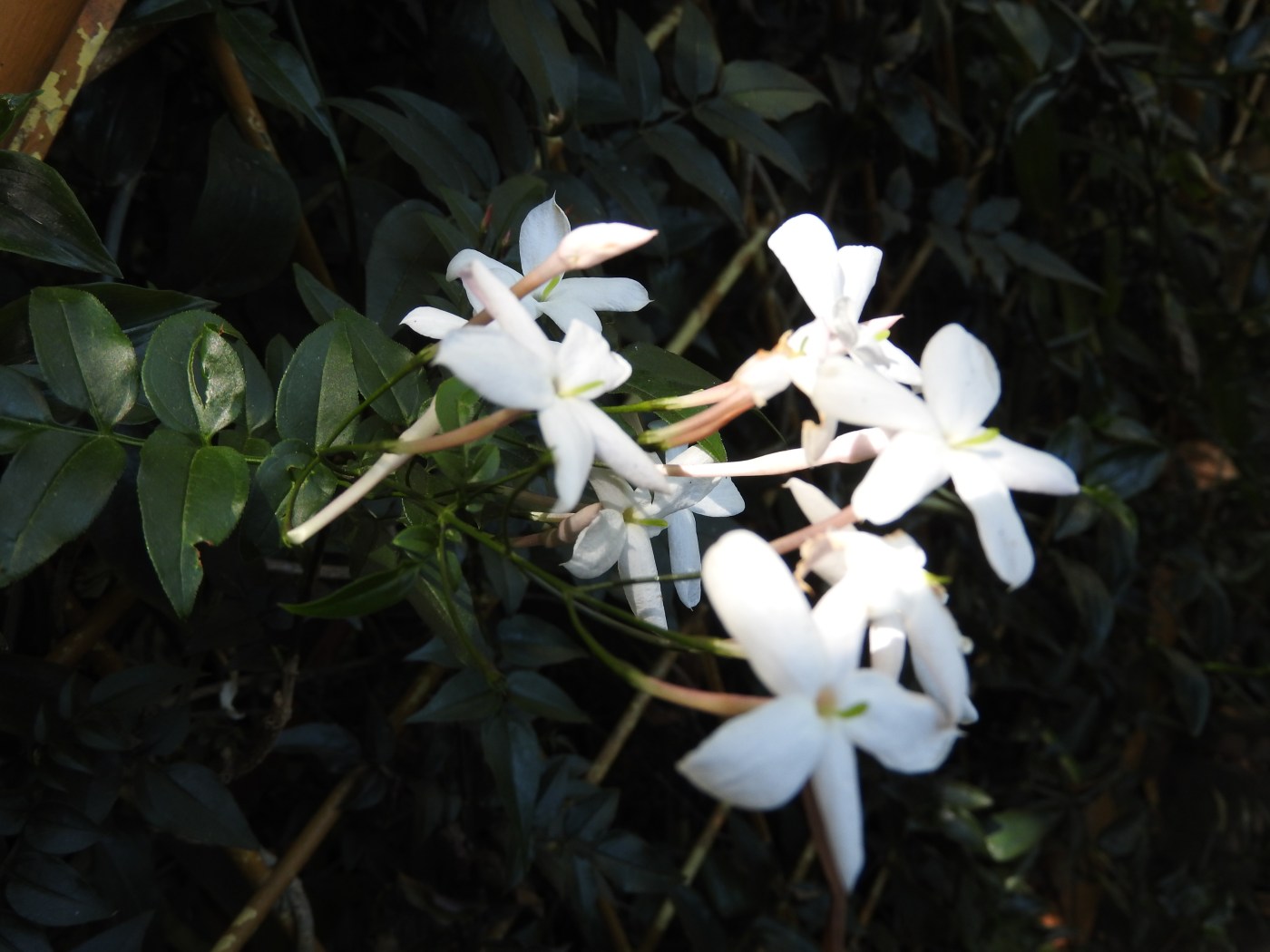
Two days before the start of classes I finally went to the Botanical Gardens at Carolina Park. It was beautiful.
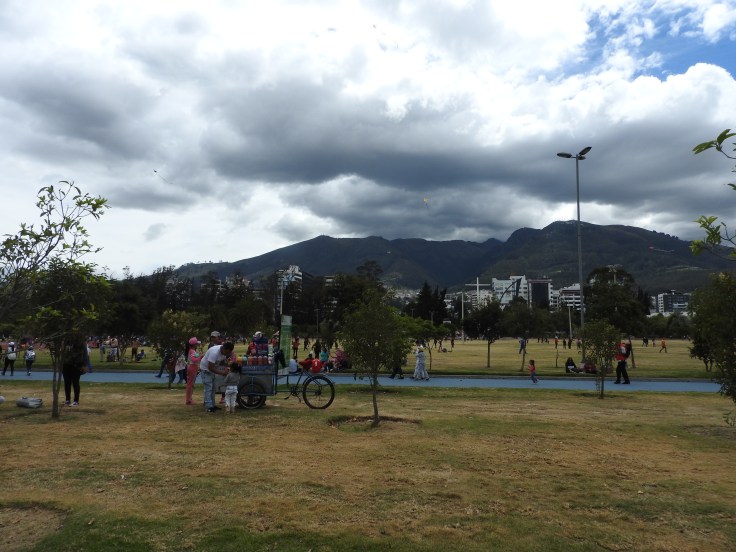
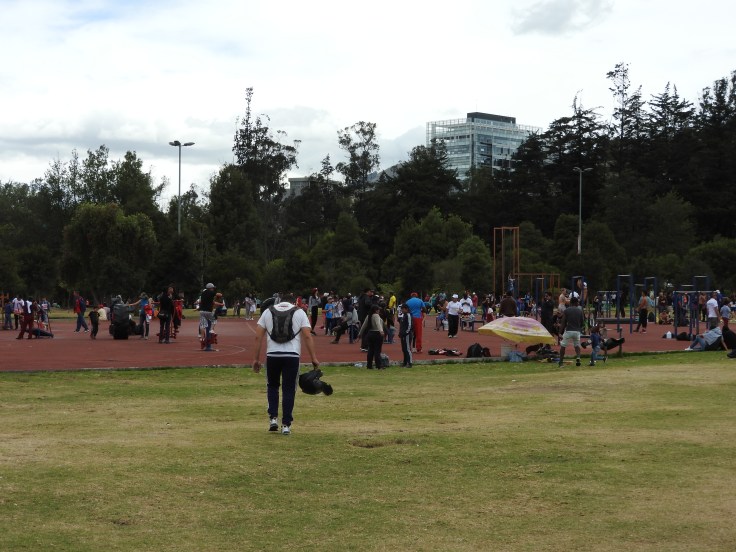
During my first day with my host family, we flew kites in Carolina Park before getting traditional Ecuadorian food for a late lunch. Finally, I had the welcome dinner for the UWM students. Everyone else had just arrived from the states.
On Monday morning, UDLA had a non-alcoholic cocktail party for us on the roof of one of the buildings. It was so fancy. Then, we had a cooking class, lunch at what felt like a five-star restaurant, Spanish class, and then a lecture on cultural humility.

Actually, what has been tough for me is how nice everything has been; as another student asked, “do we treat the exchange students who come to UWM this way?” I feel like UDLA has rolled out the red carpet for us, and I while I love eating food, I wonder what UWM could do differently to better welcome its exchange students. An additional thing I reflected on was the why of study abroad, what is the line between learning about another culture and consuming another culture? What is the line between teaching experiences and exploitation? Or a recreation of traditional hierarchies? To be more specific, getting the tour and lecture about the food market was fascinating, but being in what is often a safe space for Ecuadorians, felt a little bit like we were intruding, the herd of gringos taking photos of people without their consent. I’m not saying that we should not have gone, rather I am trying to point out the complications.
On Tuesday, we visited the home for teenage mothers and their children in the morning. This afternoon we had spanish class and a debriefing, which included a discussion of social determinants of health and our impressions of the day.

Some of my other reflections of the day are primarily about our trip to the home for teenage mothers and their children. I had very mixed feelings about it. On the one hand, I liked that we played soccer because that’s what the girls wanted to do, on the other hand, having a group of foreigners coddle strangers children, felt somewhat like the problematic side of voluntourism: Look at the white girl holding some child, isn’t that neat! What did the girls get out of our visit? Did they even want us visiting? Did they enjoy hanging out with us? Did they feel like they could talk to us? Were they comfortable with how they were treated? Additionally, while it is a nice gesture, an hour of math tutoring is not going to turn a semester around. I also had a hard time with the discussion. There is a fine line between observing and inserting our own assumptions (William Easterly has a great book called The Tyranny of Experts, which touches on that), we know nothing about the girls situations, and why should we? We are not their friends, we do not have trust, and they do not owe us any explanation. They deserve to be treated with dignity, not like zoo animals on which we are practicing a skill at their expense. There is also a massive power differential, due to our educational, economic, and occupational statuses. I am not saying we should not have gone to the mothers and babies home, but what I am saying is that we need to be cautious and compassionate. The only difference between us and them is geography, it is not individual volition as we have often been taught to believe in the U.S., it is not intelligence, it is not better decision making, it is just time and place. We are not as far from being in their shoes as we would like to think and I think we need to remember that when we are discussing other people’s life circumstances.
Moreover, the more I learn and the longer I have lived abroad the greater understanding I am able to glean about how little I actually know. It is the “the more you know the less you know” phenomenon. Thus, I think we need to be cautious not become Extreme Experts (God, I feel like an asshole, I’m citing myself, mashafrommilwaukee.com). An Extreme Expert is someone who has been a few weeks, or even a few years in a place other than where they grew up, and feel emboldened in the rightness of their information, no matter how ethnocentric, classist, or racist it may be. As I wrote in my blog, “A bit or even a lot of information, without critical reflection, and with the intersection of the power that comes with race, history, and institutional support, can result in the reinforcement of harmful stereotypes and power structures that fuel Extreme Experteeism. Extreme experts further position themselves as the producers of knowledge regarding the community in which they are typically guests, either when they are still there or when they return home. Travel, in my opinion should be humbling, uncomfortable, and challenging. Not necessarily solely physically uncomfortable and challenging, but mentally. You don’t know how things work, you may or may not speak the language, everything works differently enough to be stressful, and you are the outsider. You need to figure it out, make friends, and realize that your way of doing things is not the only way of doing things, and you need to adjust to your environment.” (https://mashafrommilwaukee.com/2019/06/30/week-five-alota-expert/)
Again, I am not saying we should not have gone to the home, as I think it is an important discussion about knowledge, assumptions, and overall reflecting on our own lens; however, as need to be careful that it does not reinforce preconceived notions that we may not even been aware that we had.

On Wednesday, we had various lectures. We had a lecture on the epidemiological profile or Ecuador, followed by a crash course on the Ecuadorian healthcare system, followed by an informational session about the Global Health program at UDLA. Finally, before lunch we visited the simulation labs for medical students and the multimedia labs in the basement. In the afternoon, we had a student-led discussion of two articles, and then had a lecture about the healthcare system in Napo. I want to preface what I’m about to write by saying that UDLA has been amazing and the staff and the lecturers had really been top-notch… The lecture on Napo province was deeply saddening, it was given by someone who had never been to Napo and who was drawing their information based on their impressions of Pastaza (a difference province) from 20 years ago. The lecturer called the Waorani “nude and uncivilized” and the Kichwa similar things. Yet, I need to remind myself that people do not know what they do not know, and we can only really by open and humble about what we do not know. Yet, the way that the instructor talked about indigenous people of Ecuador: a plethora of stereotypes, incorrect information, and negativity as well as minimization of these groups, was deeply saddening. Especially considering the audience. The undergrads are all intelligent and pleasant, but they also came to Ecuador with preconceived notions about what it would be like and what the Amazon is like, and the instructors veiled demeaning comments about the Amazon “they’re not civilized”, sent the discussion down a rabbit hole, in which students were asking about shrunken heads and guinea pigs. It was sad because it took what could have been a learning opportunity and turned it Amazonian culture into a farce.
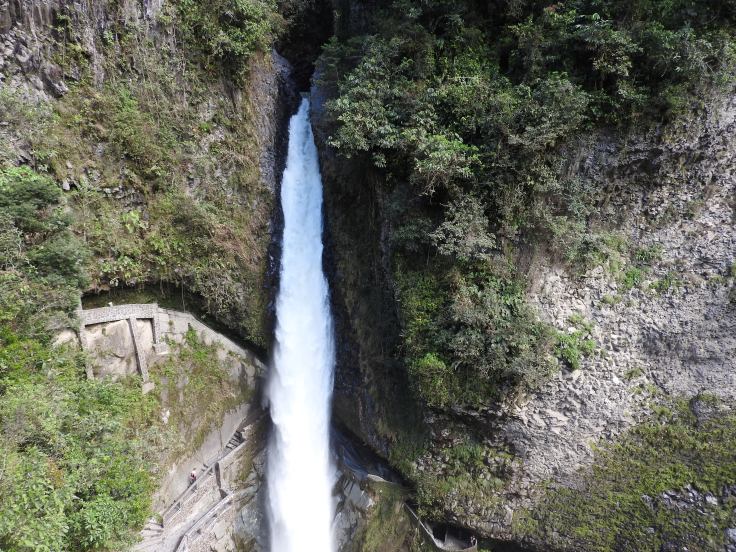

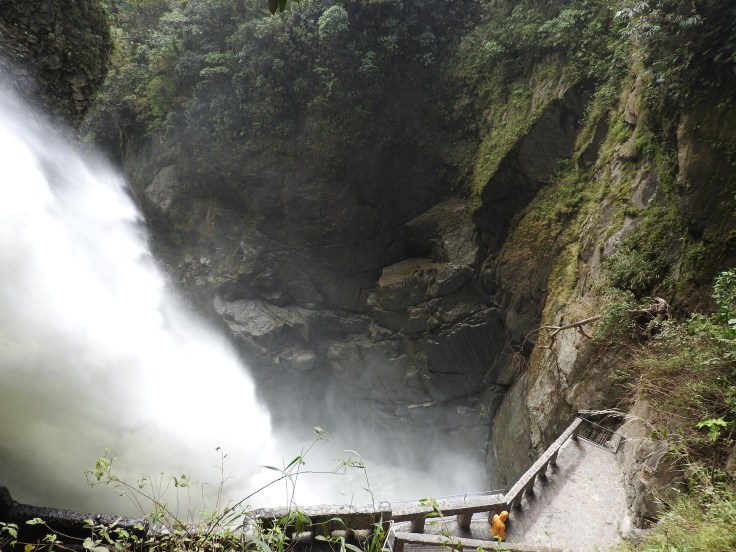
On Thursday, we headed to Tena. There is nothing quite like the view when you finally come out of the Andes Mountains and the massive lush Amazon basin is stretched in front of you as far as you can see. It is one of my favorite views in the entire world, it is pure magic.

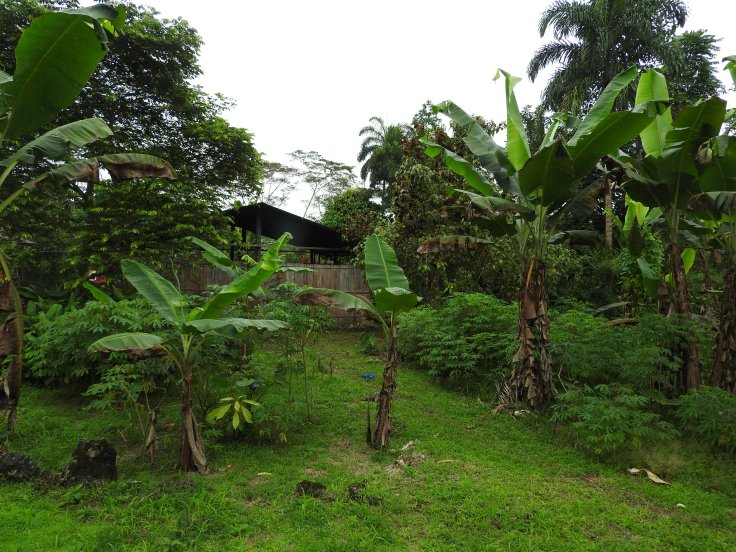
On Friday, we went to Amupakin (a traditional midwifery center), the subcentro in Archidona, had a presentation on potable water in Napo, went to Don Clemente’s Chagra, had dinner at Don Clemente’s place of residence, and some people got a shaman cleansing, and then we went back to the hotel. It was a very long day. The cleansing felt a little bit like “express cleansing.” I absolutely loved the food at Don Clemente’s, that is arguably my favorite meal in Ecuador. I have eaten it many times and I just love the whole thing. Most of the other UWM students barely ate. It was fern, heart of palm, bamboo, frog, a type of root, and grubs. I loved it, I love grubs, so I was able to chow down because no one else ate theirs.
 MFM
MFM 
Leave a comment