
Author: Masha
Week Two – Supi Siki
June 2019
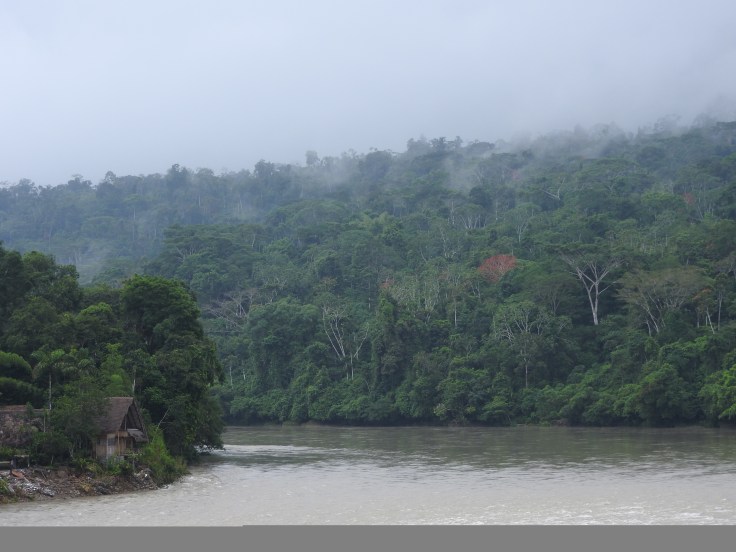
On Sunday, after a brief walking tour of Quito, the group began the journey to the field school. A roughly six hour drive that turned into eight after two stops and slow hair-pin turn after hair-pin turn.
Ascending into the Andes to leave Quito was stunning, creme-colored peaks that transformed into verdant edges rose into the clouds and the road transformed from a straight shot out of the city into creeping turns to make our way over the cordillera. The small bus, filled primarily with eager bright-eyed and bushy-tailed U.S. undergraduates (and a small group of graduate students), sputtered along the road, the driver going a cautious 25-30 mph.
This nice bus with seat-belts had one downside, the on-board bathroom. The door was not properly fitted to the frame so in order to open it you had to lift the handle and slam it with your shoulder. This proved to be very difficult in the moving vehicle with little space to move; thankfully, another student opened the door for me. The issue was once I was in the bathroom, I couldn’t get out. The scene is comical, I am trapped in a tiny near pitch-black bathroom getting thrown around like a ball in the pin-ball machine due to the sharp turns, yelling for someone to let me out. Thankfully, someone heard me and got me out of the bathroom, and I returned, nauseated, to my seat.
On the way to the lodge, the first stop we made was to hot springs on the edge of the cordillera. I didn’t go in because it was in the 40’s in the mountains, instead I took pictures. The second stop was to a hummingbird reserve where we were served hot chocolate. I was grateful for both stops as the turns were nauseating and the smell of burnt-rubber from the brakes of the bus only added to the overall experience. Eventually after 10pm, we made it to the lodge.
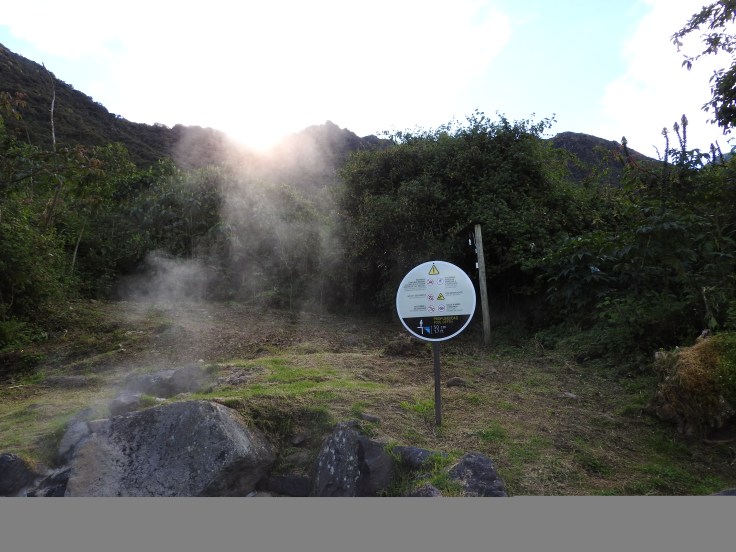
At the hot springs.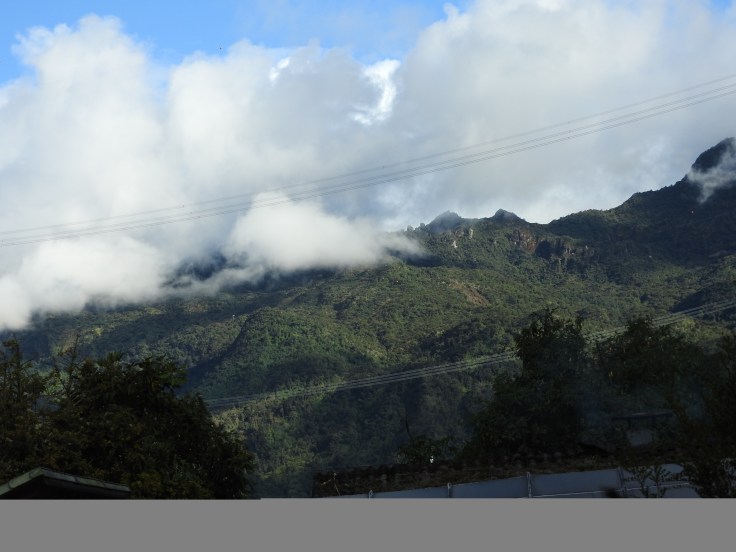
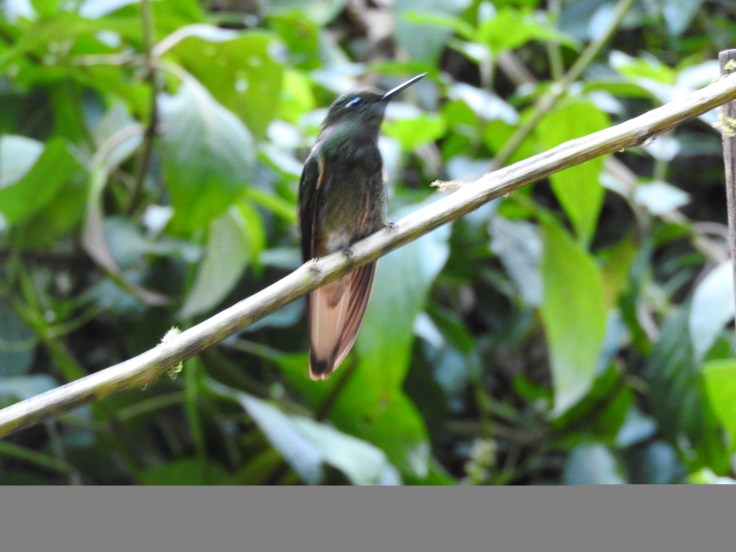
At the hummingbird reserve.
…
From 9-5 Monday through Thursday I, along with 11 other graduate students, have Quichua classes. On Friday, we only have a half day of class. The day is broken up into a three hour class in the morning a 2 hour break for lunch, and a 3 hour block of class in the afternoon. The morning class, which is taught by an English-speaking American linguist who I will call G, is a combined undergraduate/graduate Quichua class, which primarily focuses on Quichua culture. I would guess that there are an additional 15 undergraduates in the morning class. The smaller afternoon class is like trying to drink from a firehose. The afternoon class, which is taught by a local Spanish and Quichua-speaking Quichua woman, is intense, I will call her N in my posts. For example, this week we covered around 50 new words in the morning class, and 250 new words in the afternoon class.
Although I absolutely love the afternoon classes, one of my favorite things about the morning classes is the storytime with a local 90-year-old 4-foot-tall Quichua woman, who I will refer to as L. During half the morning class we are able to ask L questions using our minimal Quichua, and the American instructor translated the responses. I will share just one of her stories here, as it has previously been published in a book (if you would like the name of the book please leave a comment). The first is a comment rather than a story, dogs are important in Quichua culture. L expressed, allku runa shina shunguyu, which means, “dogs have human hearts/heart’s like a person’s.” This leads me into the story, several years ago, L was walking through the forest with her five dogs when the dogs went ahead of her and started barking. She followed her dogs, and found them barking at a large anaconda. Then, the anaconda began to try and attack one of her dogs; in order to save her beloved dog she attacked the anaconda with the machete (which she had sharpened on both sides). She saved her dog.
…
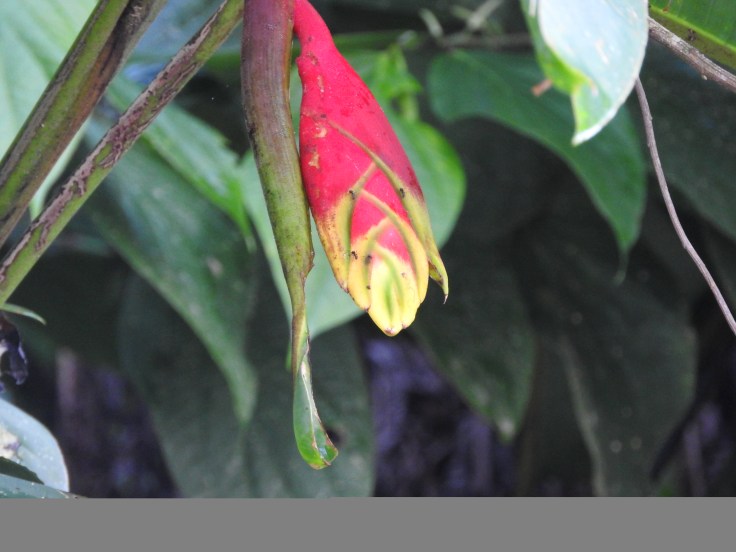
On Thursday, we had our afternoon language class in the rainforest. We all got in a truck and took a short drive away from the lodge until we reached a narrow path. For an hour we wandered along the path deeper into the steaming forest until we reached a small pond, practicing the Quichua words for the different parts of plants along the way. Eventually, the teacher, N, began making jokes with an American student who has taken four years of Quichua. They began talking specifically about a different previous American student, who was apparently particularly gassy, earning him the name ‘gassy butt’ or supi siki. What made the event so comical was the full scene: 12 sweaty graduate students, crammed together on a small path in the rainforest, while their good-spirited Quichua teacher taught them the vocabulary for fart and poop jokes…
…
The lodge is in the rainforest in the Amazon. That is a statement of fact. What is also a statement of fact is that there are all kinds of critters in the Amazon, thus if you are very bothered by critters stop reading here.
I am very comfortable with most critters, especially after all my travels and serving with the Peace Corps in Uganda. Cockroaches? Fine. Tarantulas? Furry. Mounds of ants that seem to appear out of nowhere? They must have smelled something. Grasshoppers? Lost. Golfball-sized spiders? Not preferable… However, when I returned from dinner on Thursday, I entered my room, wandered around, got fully ready for bed, and as I looked back towards my bags I thought, hmm, that looks like a new knot in the wood, maybe I just haven’t noticed it before. So, I decided to shine a flashlight on it, well it was not a knot in the wood, it was a scorpion.
This was not ideal. After processing, there is a scorpion in my bedroom, I uttered a few curse words, took a few pictures, and then set about figuring out how to remove it from my room. First I threw a shoe near it, which only made it angry and it stayed in place waving it’s little pincers. Then, I got help. I went to the kitchen and asked the son of the man who oversees the field school to help me get rid of it. So, we walked briskly back to my room, and he held a bag while I swept the unhappy scorpion into it. The scorpion was brought to the communal area where students took photos of it exclaiming, “can you believe that was in someone’s room!” Then it was released, unharmed, back into the forest.

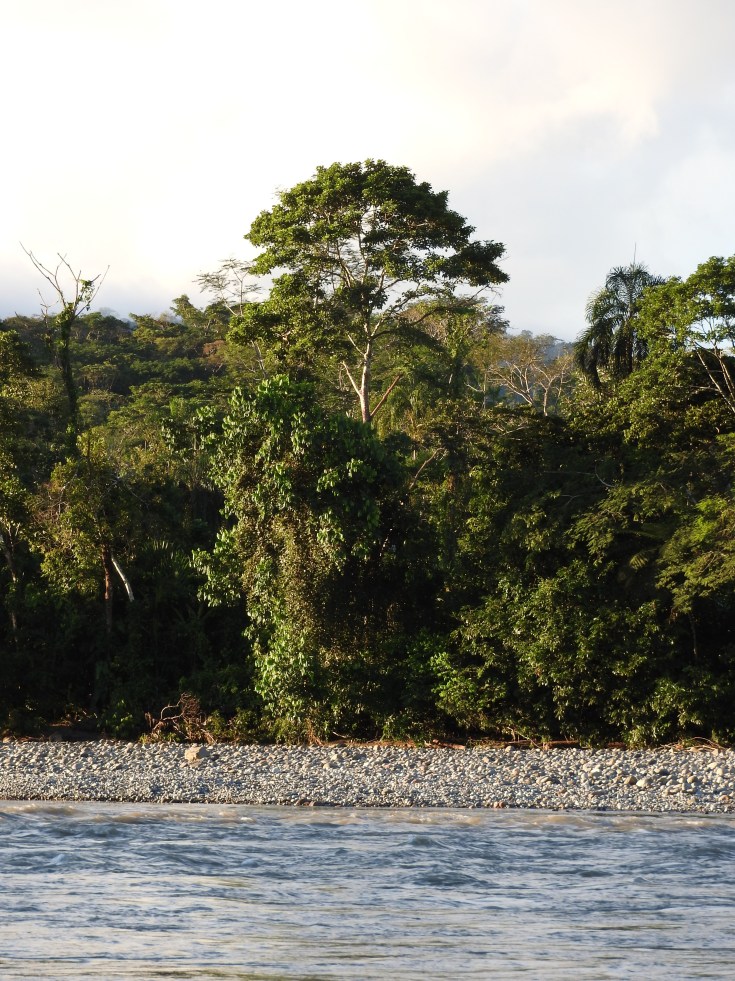
On Friday, we only had a half day of classes. Therefore, in the afternoon a group of us headed down to the beach on the river to go tubing in the “rapids” (it was more like exaggerated waves). It was a blast and a great way to wrap up the week.


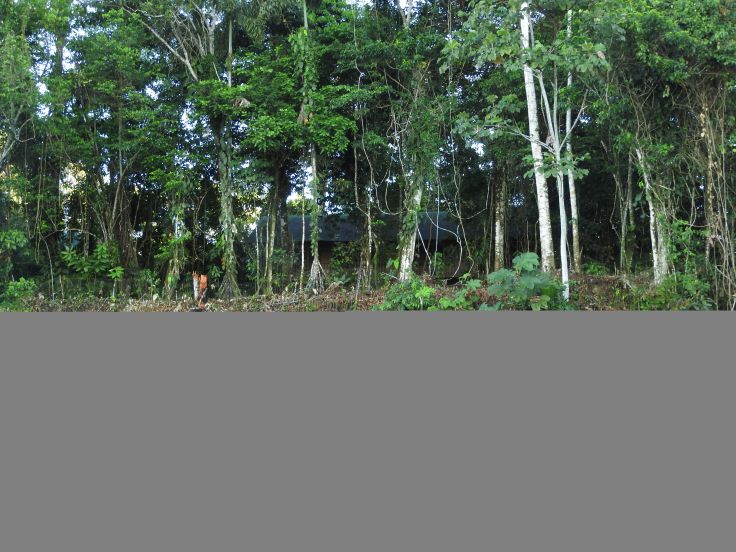
You can see a bit of the building I live in through the trees in the picture above. 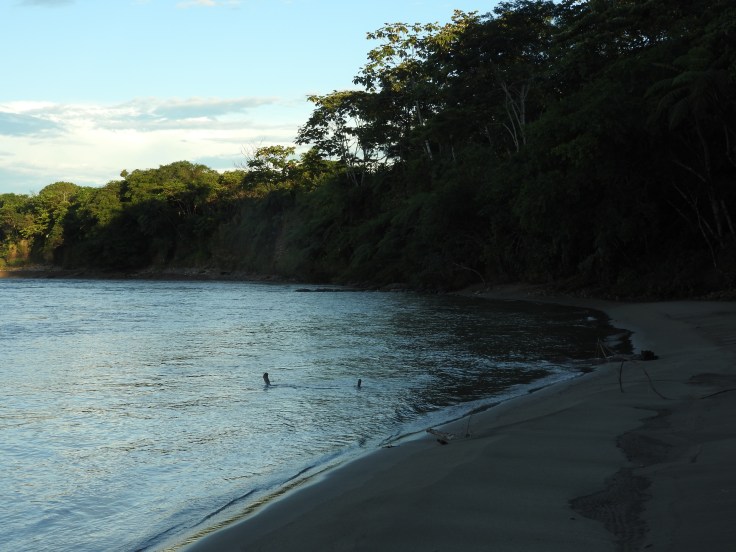

 MFM
MFM 
Leave a comment